retro.dog – The Mission
TL;DR: retro.dog is a selfish little tool I built to keep one foot in the late‑80s/90s beige‑box world I grew up in, and one foot in today's AI tooling.
In the short term the mission is simple: give retro collectors a daily "market pulse" so we can see what's actually happening without living in tab hell. Long term, every tweak nudges it toward a statistical view of the retro market – real history of prices and supply, not just vibes and nostalgia.
1. I grew up with beige boxes
I was born in the late 80s. My (Ferenc Faluvégi) first computer was a 286. There's this old photo of me sitting in front of a PC, tiny kid, huge CRT, completely locked in.
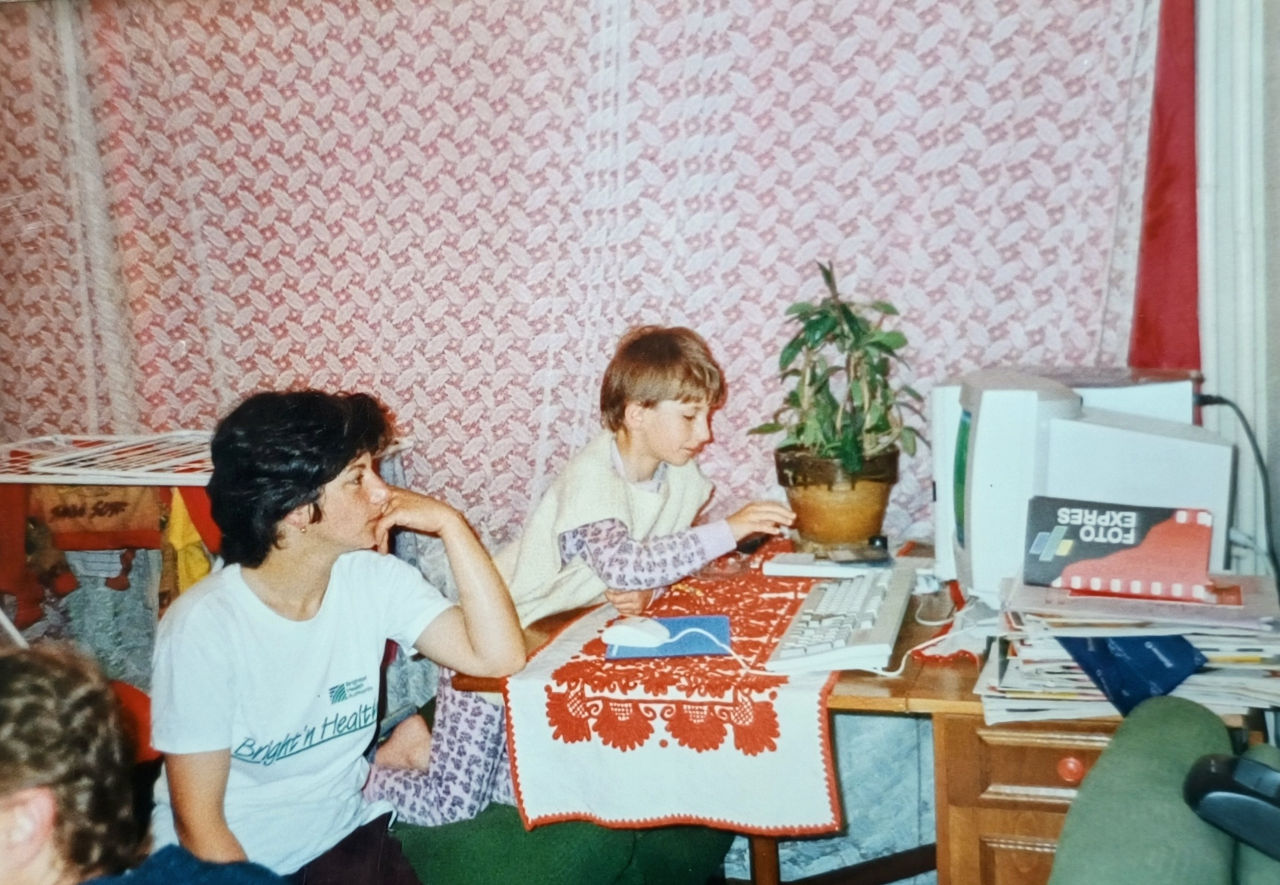
That moment never really left.
I don't just like retro hardware because it's "cool" or "aesthetic".
For me it's muscle memory: the sound of drives, the weird keys, the feeling of discovering a new world through a machine that, by today's standards, is painfully limited.
retro.dog is rooted in that.
It's not a random product idea – it's an excuse to stay close to a part of computing that shaped how I think.
2. Why retrocomputing, and why this niche?
I genuinely like the retrocomputing subculture and the people in it:
- the collectors who know obscure models by heart
- the tinkerers who still recap boards and rebuild power supplies
- the ones who care more about history and feel than "specs"
I wanted to build something for that niche – and for myself inside that niche.
Not another generic marketplace, not another generic "AI tool",
but a small, opinionated system that understands this world just a bit better than a random search bar.
retro.dog is my way of saying:
"I'm one of you, and I'm willing to put real work into making our weird little corner of the internet easier to navigate."
3. The short‑term mission: keep a finger on the pulse
In the short term, the mission is very simple:
help me (and people like me) keep a finger on the pulse of the retro market.
That means:
- answering "what showed up today?" without opening six tabs
- spotting when a category suddenly floods with new listings
- seeing when something starts quietly disappearing
- getting a daily feel for what's worth paying attention to
This is what the current ALPHA is focused on:
- a crawler that does the boring scanning
- an AI pipeline that reduces noise and highlights interesting items
- a UI that lets you see "is there anything worth seeing today?" in seconds
It's not perfect, but it already replaces a lot of manual, repetitive hunting with a single glance.
4. The long‑term mission: statistics, not vibes
Long term, the mission gets more ambitious – and more statistical:
watch prices and supply, not just listings.
In other words:
- understand how categories move over time
- build a clearer picture of:
- what's becoming rare
- what's turning into commodity
- where prices are drifting up, down, or freezing
Every small step I take with retro.dog is pointing in that direction:
- better, deeper categorisation
- more reliable cohorts of "similar" items
- cleaner historical data
- and eventually, honest, data‑backed insights about the market
I don't want to guess.
I want to be able to show what's happening – with charts, history and context, not just vibes.
5. Building for a niche I actually care about
retro.dog is intentionally narrow:
- It's not trying to serve every type of buyer.
- It's not meant for flippers chasing arbitrage across random categories.
- It's not trying to be "everyone's retro tool".
It's for:
- people who care about old machines the way some people care about classic cars
- people who remember their first 286/386/486 and still feel something when they see one
- people who want to follow the story of the retro market over time, not just snipe a bargain
The long‑term mission is to give that group better tools to see what's really going on.
6. A lab for figuring out non‑obvious problems
The other side of the mission is more personal:
retro.dog is my lab for figuring out the non‑obvious parts of AI‑driven products:
- where small models make sense and where they don't
- how much you can lean on LLMs before you need hard rules
- how to balance cost vs quality vs control
- how to encode your own taste into a system without pretending to be "objective"
Every change I make has two audiences:
- the collector in me, who wants a better market radar
- the developer in me, who wants to understand where AI actually helps and where it breaks
If I do this right, the long‑term result is not just a nicer dashboard –
it's a set of hard‑earned patterns for building AI‑driven tools in weird, messy niches.
7. Where this is going, if things go well
If things go well, the Mission looks like this over time:
- Short term: a reliable, honest daily pulse for retro gear (what's new, what's moving).
- Mid term: more sources, better filters, clearer signals, first simple visualisations of trends (categories, regions, types of hardware).
- Long term: robust statistics on prices and supply, cohort‑based views (not just "a listing", but "this type of machine over time"), tools that help you reason about when and what to buy – or when to simply watch.
All of that will take time. That's fine.
The important part is that every small iteration – every tweak to the crawler, every new heuristic, every data clean‑up – moves in this direction.